

Premium Human Grade Dog Treats Review: 2026 Guide
Sep 28 , 2026
Table of Contents
- What 'Human Grade' Actually Means for Dog Treats
- The Benefits of Human-Grade Dog Treats for Canine Health
- How to Identify High-Quality Dog Treats: A Label Reading Framework
- SALSA Approved Dog Treats: Why Certification Matters
- Pet Bakery Product Review: Artisan Treats Tested
- Single-Protein vs. Multi-Ingredient Treats: Allergy-Safe Choices
- Storage, Shelf-Life, and Sustainability in Premium Dog Treats
- Conclusion
- Frequently Asked Questions
Last Updated: September 28, 2026
What 'Human Grade' Actually Means for Dog Treats
Walk down any pet aisle and you'll see the phrase "premium human grade dog treats review" plastered across packaging. But what does human grade actually mean? Human grade is a marketing and manufacturing term describing treats made in facilities that meet the same hygiene and safety standards applied to food produced for people. At Pet Bakery, we've built our entire range around this principle since 2004.
The critical point most shoppers miss: "human grade" is not a legally defined category in the same way "organic" is. It signals that ingredients and production meet food-safe standards, not that the product is certified for human consumption. For a clear picture of how pet food is actually regulated, the UK Pet Food industry guidance explains the standards manufacturers work to.
This distinction matters because it separates genuine quality from clever labelling. Below, we'll show you exactly how to read a label, spot real certifications, and decide whether the premium price is justified.
The Benefits of Human-Grade Dog Treats for Canine Health
The core benefit of human-grade treats comes down to what's inside them. Treats made to human-grade standards typically use recognizable ingredients rather than rendered by-products, artificial colours, or synthetic preservatives.
Many owners find that switching to cleaner treats improves their dog's digestion and coat condition. A common approach is to look for short ingredient lists where you can identify every item. When the ingredient panel reads like something from your own kitchen, you're usually on the right track.
The nutritional profile also tends to be more consistent. Because premium makers control their raw materials and processing, the protein, fat, and fibre levels on the label more closely match what's in the bag. That consistency helps dogs with sensitive stomachs avoid the flare-ups cheap treats can trigger.
How to Identify High-Quality Dog Treats: A Label Reading Framework
Learning how to identify high-quality dog treats starts with three checks: the ingredient order, the analytical constituents, and the certification mark. Ingredients are listed by weight, so whatever appears first is the largest component.
-
"Human-grade" is not a legally defined category. It is a manufacturing and marketing claim meaning the ingredients and the production environment meet food-safe standards comparable to those for people. It does not mean the finished treat is certified fit for human consumption.
-
"Human-edible" (sometimes written as "human-edible grade") is a stronger, more specific claim: it asserts that each ingredient is of a standard a person could legally eat. A maker using this term should be able to evidence it ingredient by ingredient.
-
Check ingredient order: Named proteins like "beef liver" or "chicken" should lead, not vague terms like "meat derivatives" or "animal by-products."
-
Look for a named protein source with a percentage: "Beef Liver 35%" tells you far more than "cereal." Under UK labelling conventions, categories such as "meat and animal derivatives" can legally be declared without naming the species or the cut.
-
Scan for synthetic additives: Artificial preservatives such as BHA, BHT, and ethoxyquin are red flags. So are "EC permitted colourants," which is a category, not an ingredient.
-
Verify the analytical constituents: Protein, crude oils and fats, crude fibre, and crude ash should be clearly stated. Ash is a useful tell, a high ash figure often points to a high proportion of bone or rendered material.
-
Check the best-before date against the preservative list: A long shelf life on a preservative-free product is a contradiction worth questioning.
-
Confirm traceability: A serious maker can tell you the origin of each ingredient and, on request, name the certification body and audit date behind any food-safety claim.
Ingredient transparency is where most budget brands fall short. They legally declare categories rather than specific sources, which makes it impossible to know the true protein source or quality. When a pack names a species, gives a percentage, and states its analytical constituents in full, the maker is choosing to be checkable, and that is the behaviour worth paying for.
SALSA Approved Dog Treats: Why Certification Matters
SALSA approved dog treats carry a certification that verifies a manufacturer's food safety and quality systems. SALSA, the Safe and Local Supplier Approval scheme, is a UK food safety certification recognised by major retailers and used across the food industry.
Pet Bakery Product Review: Artisan Treats Tested
We put our own range through the same framework we recommend to you. Every treat below is handmade and human-grade.
| Treat | Key Protein | Standout Feature | Best For |
|---|---|---|---|
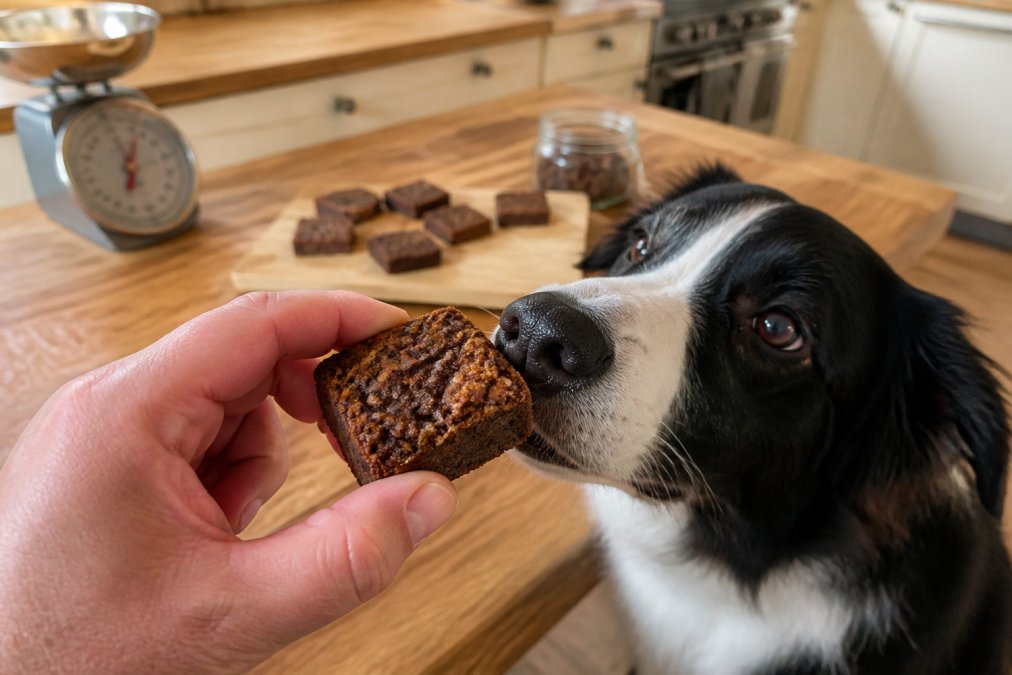
| Luxury Liver Brownies | Beef liver 35% | Rich, soft and chewy | High-value rewards |
| Mini Liver Brownies | Beef liver 35% | Added prebiotics (FOS) | Sensitive stomachs |
| Sumptuous Sunday Roast | Beef 16% | Crunchy, no added salt | Everyday training |
| Tasty Chicken Mini Bones | Chicken 16% | Crunchy shortbread texture | Picky eaters |
| Cheeky Cheese Paws | Cheese 10% | No artificial preservatives | Cheese-loving dogs |
| Healthy Skin & Coat | Chicken 10% | Gluten-free, omega 3 & 6 | Coat and skin support |
| Joint Care Treats | Chicken 10% | Green-lipped mussel | Mobility support |
Single-Protein vs. Multi-Ingredient Treats: Allergy-Safe Choices
For dogs with allergies, single-protein treats are usually the safer starting point. When a treat contains only one named animal protein, you can isolate exactly what works and what doesn't.
Storage, Shelf-Life, and Sustainability in Premium Dog Treats
A practical storage protocol for preservative-free treats:
- Keep them airtight. Once a pack is opened, oxygen drives rancidity in the fats, salmon oil and other oils go stale first. A clip-top jar or a sealed tub beats a folded bag.
- Keep them cool and dark. A cupboard away from the oven, radiator, or a sunny windowsill is ideal. Light accelerates the breakdown of oils and some vitamins.
- Never store them in a warm car or a damp cupboard. Heat speeds oxidation; damp encourages mould. Both shorten usable life dramatically.
- Buy to your usage rate. If your dog gets two or three treats a day, a large pack of soft treats may go stale before it is finished. Smaller, more frequent orders usually beat bulk buying on a preservative-free product.
- Freeze what you won't use in time. Most soft, preservative-free treats freeze well. Portion them, freeze, and defrost only what you need for the week.
- Watch for the warning signs. A sour or "off" smell, a change in colour, or any visible fuzz means the treat has gone, do not simply cut the mould off, because mould filaments and mycotoxins can spread through a soft product.
Sustainability and sourcing round out the picture. Fully traceable ingredients let you trace each component back to its origin, which supports both food safety and responsible sourcing, and it is the same traceability that makes a recall or a quality question answerable. Smaller batch production also tends to waste less than large-scale manufacturing, and shorter supply chains mean less of the product is sitting in storage losing freshness before it reaches you. For a premium buyer, freshness and sustainability are often the same decision viewed from two angles.
Conclusion
Choosing premium human grade dog treats comes down to reading labels honestly, checking certifications like SALSA, and matching the treat to your dog's specific needs. The gap between supermarket treats and genuinely traceable, human-grade options shows up in how confidently you can trust what you're feeding.
Frequently Asked Questions
What does 'human-grade' actually mean for dog treats?
Human-grade means every ingredient and the finished treat meet safety and quality standards set for human food production. This covers the raw materials, the manufacturing facility, and the handling processes. For a treat to carry this label legally, the entire supply chain must comply with human food regulations, not just pet food standards. Pet Bakery's treats are made in a SALSA approved facility, which verifies these higher production and hygiene standards are consistently met.
Are human-grade dog treats safer than standard pet-grade snacks?
They often are, because human-grade production rules out many low-quality fillers, synthetic additives, and by-products allowed in standard pet food. The risk of contamination is also lower when facilities follow human food safety protocols. However, 'human-grade' is not a regulated term on its own in the UK. Look for specific certifications like SALSA approval and transparent ingredient lists to confirm the claim is genuine and not just marketing.
Do vets recommend human-grade treats for dogs with sensitive stomachs?
Many vets suggest simpler, more digestible treats for dogs with sensitive stomachs. Human-grade treats with limited ingredients, like Pet Bakery's Mini Liver Brownies which include prebiotics (FOS) to support digestion. Always introduce any new treat slowly and watch for reactions. If your dog has known allergies, choose a single-protein option and check the full composition list first.
How can I verify that a brand's treats are truly SALSA approved?
SALSA (Safe and Local Supplier Approval) is a UK food safety certification. To verify a claim, ask the brand directly for a copy of their current SALSA certificate or check the SALSA website's list of approved businesses. A genuine SALSA approved producer will happily share this documentation. Pet Bakery has held SALSA approval since its founding, and you can request proof of certification or ask about their traceability records for any specific batch.
What ingredients should I look for in premium dog treats?
Look for named protein sources like 'Beef Liver 35%' or 'Chicken 16%', not vague terms like 'meat derivatives'. Check for natural preservatives such as rosemary extract instead of BHA, BHT, or ethoxyquin. Avoid added salt, artificial colours, and glycerin. A clear analytical breakdown (protein, oils, fibre, ash) is a good sign of transparency. Pet Bakery lists full compositions and analytical constituents on every product page, so you can compare directly.