

Benefits of Grain Free Dog Treats: A 2026 Guide
Sep 27 , 2026
Table of Contents
- What Grain-Free Dog Treats Actually Are
- Signs of Grain Intolerance in Dogs: When to Consider Grain-Free
- The Benefits of Grain-Free Dog Treats for Digestive Health
- Human-Grade Dog Treats Benefits: Quality You Can Trust
- How to Transition Dog to Natural Diet Without Upset
- How to Read Dog Treat Labels for Grain-Free Options
- Grain-Free Dog Treats: Pros, Cons, and What Vets Say
- Frequently Asked Questions
Last Updated: September 27, 2026
What Grain-Free Dog Treats Actually Are
Grain free dog treats are rewards made without wheat, barley, rye, oats or rice, using alternative carbohydrate sources such as chickpea flour or potato starch. They exist because some dogs genuinely struggle to digest grains, and because owners want to know exactly what they're feeding.
Signs of Grain Intolerance in Dogs: When to Consider Grain-Free
Grain intolerance in dogs typically shows up as digestive upset, itchy skin or recurring ear problems rather than a single dramatic reaction. If these appear after meals or treats in an otherwise healthy dog, grains are worth investigating.
Common Symptoms to Watch For
Watch for patterns rather than one-off incidents:
- Itchy skin and coat, especially around the paws, ears and belly
- Poor stools quality, including loose stools or frequent changes
- Flatulence that's persistent rather than occasional
- Breath odor or ear infections that keep returning
- Reduced energy levels or general dullness after eating
A common mistake is assuming one itchy week means a grain allergy. True food allergies in dogs are uncommon, and many suspected grain reactions turn out to be sensitivity to a specific protein.
How Vets Diagnose Grain Intolerance
Vets rarely diagnose grain intolerance from symptoms alone. The standard approach is an elimination diet: feeding a single novel protein and carbohydrate source for a set period, then reintroducing ingredients one at a time to identify the trigger. Blood tests have limited reliability, so the elimination diet remains the practical method.
The Benefits of Grain-Free Dog Treats for Digestive Health
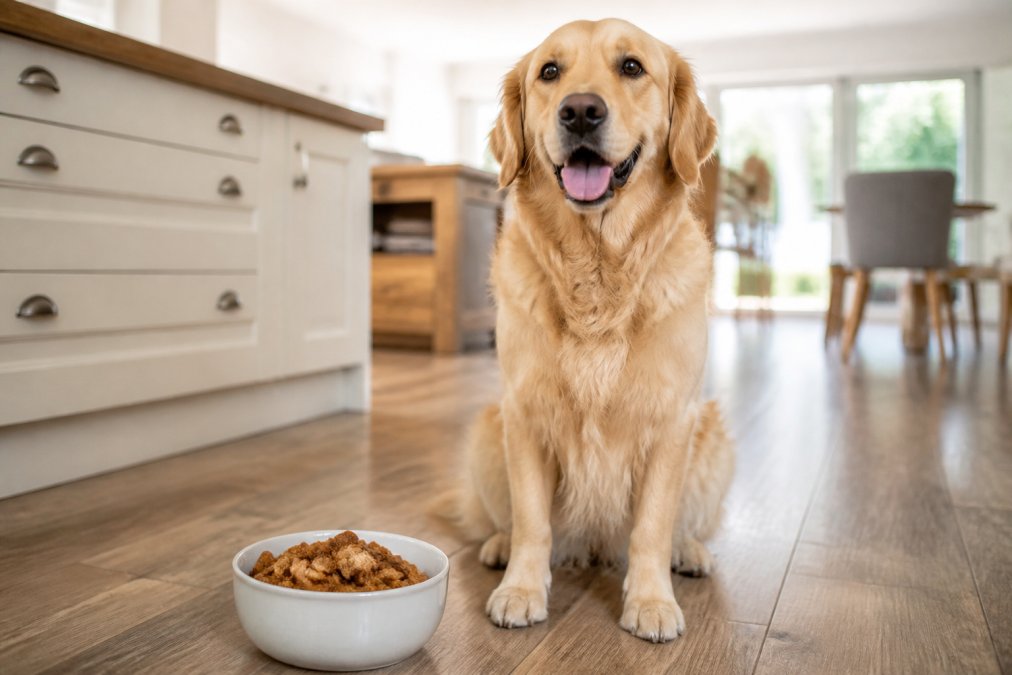
The clearest benefit of grain free dog treats is digestive support for dogs that don't process grains well. Remove the ingredient causing the problem and the digestive tract settles, often within a few weeks.
Reduced Flatulence and Better Stool Quality
Dogs with grain sensitivity often produce loose stools and frequent gas. Switching to grain-free rewards removes the fermenting carbohydrate source, and many owners notice firmer stools and less flatulence, though only if grains were the actual trigger.
Improved Nutrient Absorption
A settled digestive tract absorbs nutrients more efficiently. When the gut lining isn't constantly irritated, protein, fats and micronutrients are used more effectively, which is why owners sometimes report better skin and coat alongside digestive improvements.
Human-Grade Dog Treats Benefits: Quality You Can Trust
Human-grade dog treats are made to the same ingredient and production standards as food intended for people. The practical benefit is transparency: you can read the label and recognise every item.
What Human-Grade Really Means
Human-grade means the ingredients and production facility meet standards suitable for human food manufacture, a meaningful distinction from "natural" or "premium," which have no fixed legal definition. A human-grade claim should be backed by certification and sourcing records.
Traceability and Safety Standards
Traceability means every ingredient can be traced back to its supplier. Pet Bakery holds SALSA approval, an audited food safety standard requiring documented sourcing and production records. To verify a human-grade claim, ask the maker for certification details and ingredient origins directly.
How to Transition Dog to Natural Diet Without Upset
Switching to a natural diet works best as a gradual process over one to two weeks. Sudden switches are the most common cause of digestive upset during a transition.
A Step-by-Step Transition Plan
- Days 1-3: Keep the current food, swap only the treats to natural options
- Days 4-7: Replace roughly a quarter of the main food with the new diet
- Days 8-10: Move to a 50/50 split if stools remain firm
- Days 11-13: Increase to three-quarters new food
- Day 14 onward: Complete the switch, monitoring energy levels and stools
Pause at any stage if stools loosen, holding that ratio for a few extra days. Keep treat portions small so they don't distort what you're observing.
How to Read Dog Treat Labels for Grain-Free Options
Reading a label properly takes about thirty seconds and tells you more than the front of the packet ever will. The composition list is ordered by weight, so the first three ingredients define the product.
The Four Things to Check, In Order
1. The first three ingredients. You want a named animal protein, "chicken," "salmon," "white fish", not "meat and animal derivatives," a legal category that can contain a wide range of material. If the first ingredient is a pulse or starch, the treat is built around carbohydrate, not protein.
- Crude protein, the higher the figure, the more of the treat is protein by weight.
- Crude oils and fats, drives palatability and calorie density. A treat at 20% fat is a very different proposition to one at 8%.
- Crude fibre, relevant if your dog has a sensitive gut; very high fibre can loosen stools in some dogs.
- Crude ash, a proxy for mineral content. Unusually high ash often means a lot of bone or mineral filler.
A Worked Example
Take two hypothetical grain-free treats.
Treat A lists: chicken (40%), chickpea flour, potato starch, chicken fat, salmon oil, flax seed.
The Blood Sugar Angle
One rarely explained benefit of grain-free treats is the effect on blood sugar. Grains such as wheat and rice are relatively high on the glycemic index, breaking down quickly into glucose, while pulses and many grain-free carbohydrate sources sit lower, giving a slower, flatter glucose release.
Age Changes the Answer
Grain-free treats are not one-size-fits-all across a dog's life:
- Puppies have high energy and nutrient demands and are still developing. Treats should be small, protein-led, and kept to a modest share of daily intake so they do not displace a complete growth diet.
- Adult dogs with no sensitivity gain nothing specific from grain-free; it is a preference.
- Senior dogs often benefit from softer textures and treats lower in fat. Grain-free is not automatically the right answer here, a senior dog with no grain issue may do better on a gentle grain-inclusive treat.
What to Ignore
"Natural," "premium," "holistic" and "grain-free" on the front of a pack are marketing terms without fixed legal definitions, not lies, but not guarantees. The composition list and analytical constituents are what a manufacturer is accountable for. Trust those.
Grain-Free Dog Treats: Pros, Cons, and What Vets Say
Grain-free treats suit some dogs extremely well and offer nothing to others. The veterinary position is not that grain-free is dangerous or superior, but that it's a legitimate choice for dogs with a confirmed grain sensitivity and unnecessary for dogs without. The nuance sits in what replaces the grain.
| Factor | Grain-Free Treats | Standard Grain-Based Treats |
|---|---|---|
| Best for | Dogs with confirmed grain sensitivity | Dogs with no grain issues |
| Digestive impact | Settles sensitive digestion | Fine for most dogs |
| Cost | Usually higher | Usually lower |
| Label scrutiny | Needs careful reading | Needs careful reading |
| Vet guidance | Recommended for diagnosed cases | Standard option |
Pros:
- Removes a genuine trigger for sensitive dogs
- Often uses simpler, more transparent ingredient lists
- Can improve stools quality and reduce flatulence
Cons:
- Costs more than standard treats
- No benefit for dogs without grain sensitivity
- Requires careful label analysis to avoid poor substitutes
The Legume Question Most Guides Avoid
When a manufacturer removes wheat, barley, rye or oats, something has to take their place, usually a pulse such as peas, chickpeas, lentils or their derivatives (pea protein, pea fibre, lentil flour). This matters more than the grain question itself.
- Check where pulses sit in the composition list. One pulse ingredient low down is very different from three pulse ingredients in the first five.
- Look for named animal protein first. A treat that leads with chicken, salmon or white fish is built around protein, not around a pulse blend.
- Watch total treat load. Treats are typically recommended to make up no more than around a tenth of daily calories, so a pulse-heavy treat has less room to influence the whole diet.
- Ask about taurine. Some manufacturers supplement it; some rely on the animal protein content to supply it. Either is defensible, but the answer tells you how much thought went into the formulation.
What the UK Regulatory Position Actually Says
"Grain-free" is not a regulated claim the way a medicinal claim would be. Under the retained framework governing pet food in Great Britain, treats are subject to feed hygiene and labelling rules, and the composition list is the legally controlled part of the label, ingredients must be declared in descending order by weight.
A Balanced Way to Decide
Work through this in order:
- Does your dog have a diagnosed or strongly suspected grain sensitivity? If not, grain-free is a preference, not a need.
- If yes, what is replacing the grain? Prefer treats led by a named animal protein with pulses present but not dominant.
- Is the rest of the diet grain-free too? If so, mention it to your vet at the next check-up.
- Can you verify the maker's sourcing and safety standards? A producer who can answer that question is a producer who knows what is in the bag.
For dogs with confirmed sensitivities, Pet Bakery's Healthy Skin & Coat Treats use rice flour and chickpea flour with salmon oil, flax seed and turmeric, while the Joint Care Treats add green lipped mussel extract for mobility support. Both are handmade in small batches with fully traceable ingredients.


Frequently Asked Questions
Are grain-free dog treats good or bad?
Grain-free dog treats can be good for dogs with grain intolerances or allergies, as they remove common triggers like wheat, barley, and rye. They often use alternative carbohydrates such as chickpea flour or potato starch, which are easier to digest. However, they are not automatically healthier for all dogs. The key is choosing treats with high-quality, natural ingredients and no artificial fillers. If your dog has no grain sensitivity, a balanced diet including grains can be perfectly healthy.
Do vets recommend grain-free treats for all dogs?
No, vets do not recommend grain-free treats for all dogs. They are typically suggested for dogs with confirmed grain allergies or intolerances, or those with sensitive digestion. For dogs without such issues, grains can provide valuable nutrients and fibre. Always consult your vet before making significant dietary changes, especially if your dog has underlying health conditions. A vet can help determine if grain-free is appropriate for your individual dog.
How can I tell if my dog has a grain intolerance?
Signs of grain intolerance in dogs include itchy skin, excessive scratching, ear infections, vomiting, diarrhoea, and excessive flatulence. These symptoms often appear after eating treats or food containing grains. If you suspect an intolerance, try an elimination diet under veterinary guidance: remove all grain-containing foods for 8-12 weeks, then reintroduce grains one at a time to identify the trigger. Keep a diary of symptoms to share with your vet.
What should I look for in high-quality grain-free dog treats?
Look for treats with named protein sources (e.g., chicken, fish) as the first ingredient, not vague terms like 'meat meal'. Avoid artificial colours, flavours, and preservatives. Check for transparency: brands that provide full ingredient lists and traceability information are more trustworthy. For example, Pet Bakery's Healthy Skin & Coat Treats use flax seeds, turmeric, and salmon oil, all natural ingredients with a clear composition. Also consider texture and size appropriate for your dog.
Choosing the right treats comes down to knowing your dog, not following a trend. If you suspect grain sensitivity, work with your vet on an elimination diet, then choose rewards with short, transparent ingredient lists. Pet Bakery makes handmade, human-grade treats with fully traceable ingredients and SALSA approved production, so you can see exactly what's in every biscuit. Browse the full range and find the right fit for your dog's dietary requirements.