

Natural Dog Treats for Sensitive Digestion: 2026 Guide
Oct 05 , 2026
Table of Contents
- Comparison Table: Natural Dog Treats for Sensitive Digestion
- Best Hypoallergenic Dog Treats for Allergies and Sensitive Tummies
- Easy to Digest Dog Treats: What Makes Them Gentle on the Gut
- Ingredients to Avoid for Dogs with Sensitive Stomachs
- How to Introduce New Treats to a Dog Safely
- Portion Size, Treat Calories, and Reading Labels for Sensitive Digestion
- When Digestive Symptoms Need Veterinary Attention
- Conclusion: Choosing the Right Natural Dog Treats for Your Dog
- Frequently Asked Questions
Last Updated: October 5, 2026
Comparison Table: Natural Dog Treats for Sensitive Digestion
Finding natural dog treats for sensitive digestion starts with knowing which ingredients calm the gut rather than irritate it. At Pet Bakery, we have been baking handmade, human-grade dog biscuits since 2004. The table below summarises how our three most gut-friendly recipes compare.
| Treat | Key Ingredients | Best For | Price |
|---|---|---|---|
| Fresh Breath Treats | Parsley, peppermint, ginger, chicory root | Daily rewards, fussy eaters, gentle digestion | £3.89 |
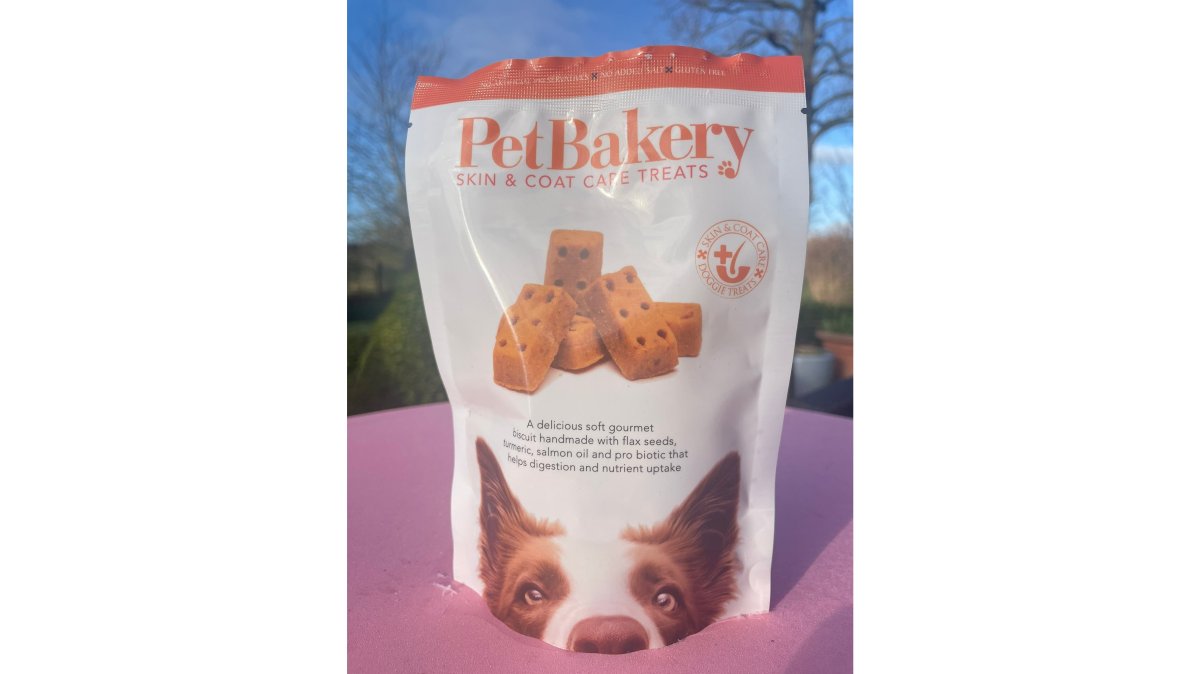
| Healthy Skin & Coat Treats | Flax seed, turmeric, salmon oil, prebiotic chicory root | Sensitive tummies, dull coats, itchy skin | £3.89 |
| Joint Care Treats | Spirulina, turmeric, green lipped mussel, chicory root | Older dogs, mobility support, sensitive digestion | £3.89 |
Every recipe is gluten free, handmade in small batches, and free from the artificial fillers that so often trigger stomach upset.

Best Hypoallergenic Dog Treats for Allergies and Sensitive Tummies
The best hypoallergenic dog treats for allergies are those built on a single, clearly named protein with no wheat, maize, or dairy in sight. Our Healthy Skin & Coat Treats use chicken, flax seed, and turmeric.
It helps to know what you are actually dealing with. A food intolerance is a digestive reaction, wind, loose stool, an unsettled stomach, that does not involve the immune system and tends to be dose-related.
Single-Protein Options for Elimination Diets
An elimination diet only works if you can control every protein your dog eats. Single-protein treats let you do that without guesswork. Our Joint Care Treats lean on salmon oil and green lipped mussel for omega 3, which supports joints.

A limited-ingredient treat is not automatically hypoallergenic. A biscuit can contain only five ingredients and still include the exact protein your dog reacts to. The label must name the protein specifically, "rabbit" or "white fish" rather than "meat derivatives", and it must not share a production line with the protein you are avoiding if cross-contamination is a concern.
Running a Proper Elimination Trial
If you suspect a food allergy rather than a simple intolerance, a structured trial is the only reliable way to identify the trigger. Most veterinary practitioners recommend the following approach:
- Choose one novel protein your dog has never eaten, and feed it as the sole protein across food, treats, and chews.
- Hold the trial for six to eight weeks. Skin and ear symptoms often take that long to settle, even after the trigger is removed.
- Change nothing else during the trial, no new supplements, no table scraps, no shared bowls with other pets.
- Keep a daily log of stool quality, itching, and any flare-ups, so your vet can read the pattern.
- Reintroduce the old protein only after symptoms have resolved, and only under veterinary guidance, to confirm the trigger.
Treats are the most common place an elimination trial quietly fails, because owners forget that a single biscuit counts. If you are mid-trial, the safest option is to use the trial protein itself as the reward, or to pause treats entirely until the trial ends. Your vet can advise on the right duration and whether a hydrolysed or novel-protein diet is appropriate for your dog.
Easy to Digest Dog Treats: What Makes Them Gentle on the Gut
Easy to digest dog treats share three traits: simple carbohydrates, a single protein, and added fibre. Rice flour and chickpea flour replace wheat and maize, both of which are common allergens. Chicory root, a natural prebiotic, feeds the good bacteria in the gut so digestion stays steady rather than unpredictable.
Prebiotics and Fibre for Digestive Support
Prebiotics are the unsung heroes of gut health. Unlike probiotics, which add live bacteria, prebiotics feed the bacteria already living in your dog's digestive system. Chicory root appears in all three of our recipes for exactly this reason: it supports digestion and nutrient uptake without any harsh additives. Pumpkin, sweet potato, and oats are other gentle fibre sources worth looking for on a label.
Ingredients to Avoid for Dogs with Sensitive Stomachs
The fastest way to settle a sensitive tummy is to remove the usual suspects. Many owners focus on what to add, when cutting the wrong ingredients does more good. Watch for these on any label:
- Artificial colours and preservatives such as BHA, BHT, and ethoxyquin
- Wheat, maize, and soy, three of the most common allergens for dogs
- Added sugars and syrups, which disrupt gut bacteria
- High-fat fillers, which can trigger stomach upset and pancreatitis
- Vague terms like "meat derivatives" or "cereal products", which hide the real source
If a label will not name the protein, treat that as a red flag. Transparency is everything when you are managing food sensitivities.
How to Introduce New Treats to a Dog Safely
Introducing a new treat safely takes about a week and a little patience. Start with a piece no bigger than your thumbnail, offer it once, then wait 24 hours and watch for itching, wind, or changes in stool. If nothing flares up, increase to a normal portion over the next few days. Keep a simple diary of what you fed and when, because patterns are far easier to spot in writing than from memory. If your dog has a known allergy, always check the full composition before the first bite, not after.
Portion Size, Treat Calories, and Reading Labels for Sensitive Digestion
Treats should never make up more than about a tenth of your dog's daily calories, so portion control matters as much as ingredient quality. A small biscuit like ours is a reward, not a meal, and our feeding guide calls them a complementary food for exactly that reason.
Working Out How Much Your Dog Can Have
The tenth-of-calories rule is easy to apply once you know two numbers: your dog's daily calorie need and the calorie content of the treat. A rough maintenance guide many owners use is around 95 kcal per kilogram of bodyweight to the power 0.75 (a formula your vet can calculate precisely for your dog's age, weight, and activity). For a typical 10 kg dog, that lands somewhere near 400-450 kcal a day, which means treats should stay under roughly 40-45 kcal.
If your dog is prone to stomach upset, keep the total treat load low and split it across the day rather than offering a handful at once. A sudden large portion of any new food, even a gentle one, is a common trigger for loose stool.
A Practical Label Checklist
When reading a label, check the analytical constituents: crude protein, crude oils and fats, crude fibre, and crude ash tell you more about a treat than the front of the packet ever will. Lower fat recipes suit dogs prone to stomach upset, while higher fibre supports digestion. Use this checklist before you buy:
- Named protein first. The protein should be stated specifically ("salmon", "venison"), not as "meat and animal derivatives".
- Fat content. Compare crude oils and fats across products. For a dog with a sensitive gut or a history of pancreatitis, lower-fat options are usually the safer choice.
- Fibre source. Look for recognisable fibre such as chicory root, pumpkin, sweet potato, or oats rather than unspecified "cereal products".
- Additives. Check for artificial colours, preservatives (BHA, BHT, ethoxyquin), and added sugars or syrups.
- Allergen statement. Look for a clear statement about wheat, maize, soy, and dairy.
- Feeding guide. A responsible maker states that the treat is complementary and gives a portion guide, if there is none, treat that as a warning sign.
Matching the Treat to the Constraint
Different digestive problems call for different choices. A dog with a low-fat requirement does best with a small, lean biscuit rather than a rich chew. A dog on a single-protein trial needs a treat built on that same protein. A dog with grain sensitivity needs a wheat- and maize-free recipe, but remember that grain-free is not the same as hypoallergenic. A dog that struggles with hard chews, older dogs, or those with dental issues, may do better with a softer baked treat. Matching the treat to the constraint is more useful than chasing the single "best" product.
When Digestive Symptoms Need Veterinary Attention
Some symptoms need a vet, not a change of treat. Occasional soft stool after a new food is common, but persistent vomiting, blood in the stool, weight loss, or a dog that refuses food for more than a day all warrant a call to your vet. The RSPCA pet care advice and PDSA pet health guidance both stress that recurring digestive problems can point to something beyond diet. If you are unsure, your vet can advise on an elimination diet and rule out underlying conditions before you spend more on treats.
Conclusion: Choosing the Right Natural Dog Treats for Your Dog
Sensitive digestion does not mean your dog has to miss out on rewards. Choosing natural dog treats for sensitive digestion comes down to simple ingredients, a single protein, and honest labelling, and that is exactly how we bake at Pet Bakery. Our handmade, SALSA approved biscuits use 100% natural, fully traceable ingredients your dog will think you made yourself.
Frequently Asked Questions
What are the best natural dog treats for dogs with sensitive stomachs?
The best natural dog treats for sensitive digestion are those with limited ingredients and a single protein source. Look for treats that are gluten-free and free from artificial fillers. For example, treats made with rice flour, chickpea flour, and a single protein like chicken or salmon, such as Pet Bakery's Healthy Skin & Coat Treats, are designed to be gentle. Always check the composition for ingredients you know your dog tolerates well.
Which ingredients should I avoid in treats for a dog with a sensitive stomach?
Avoid common allergens like wheat, maize, soy, and dairy. Artificial colours, flavours, and preservatives can also trigger digestive upset. If your dog has known food sensitivities, steer clear of those specific proteins. Look for treats with a short ingredient list and no vague terms like 'meat derivatives'. Choosing limited-ingredient treats helps you pinpoint what works for your dog without causing a flare-up.
Can natural dog treats cause an upset stomach?
Yes, even natural treats can cause an upset stomach if they contain an ingredient your dog is sensitive to or if they are given in too large a quantity. Introducing any new treat gradually is key. Start with a very small piece and monitor your dog for 24 to 48 hours. If you see signs like loose stools or itching, stop the treat and consult your vet. Natural does not automatically mean hypoallergenic for every dog.
How should I introduce a new treat to a dog with sensitive digestion?
Introduce new treats slowly over several days. Begin with a piece no larger than your thumbnail and wait 24 hours to watch for reactions. If your dog's digestion stays normal, you can gradually increase to the recommended portion. Always introduce one new treat at a time so you can identify the cause if a problem arises. Keep a simple diary of what you feed and any symptoms to share with your vet.
What chews are good for dogs with sensitive stomachs?
For dogs with sensitive digestion, choose chews that are highly digestible. Soft, baked biscuits are often easier on the stomach than hard, dense chews. Look for options made with simple ingredients like rice flour, chickpea flour, and a single protein. Pet Bakery's Joint Care Treats, for instance, are soft gourmet biscuits that include chicken and green lipped mussel extract, and are designed as a complementary food.
If your dog's sensitive stomach has made treat time a worry, you are not alone, and it does not have to stay that way. Pet Bakery bakes small-batch, human-grade treats with fully traceable ingredients and SALSA approved production, so every biscuit is as gentle as it is delicious. Explore our handmade range and find the recipe that suits your dog.
FEDIAF nutritional guidelines for pet food