

How to Store Artisan Dog Treats for Lasting Freshness
Oct 02 , 2026
Table of Contents
- Why Artisan Dog Treats Need Different Storage
- The Shelf Life of Natural Dog Treats Explained
- Best Containers for Homemade Dog Treats
- Signs Dog Treats Have Gone Bad
- Moisture Control and Humidity: The Silent Threats
- Ingredient-Specific Storage for Different Treat Types
- Travel Storage and Eco-Friendly Options
- Frequently Asked Questions
Last Updated: October 2, 2026
Why Artisan Dog Treats Need Different Storage
When you store artisan dog treats, remember they are handmade, preservative-free bakes made in small batches, so they spoil faster than mass-produced biscuits. Learning how to store artisan dog treats properly keeps them fresh and safe. This guide from Pet Bakery explains containers, shelf life, and moisture control.
Most supermarket treats last for months because they are packed with preservatives. Natural treats have no such safety net. That is the trade-off you accept for real ingredients.
Pet Bakery has made handmade, human-grade treats since 2004. Storage is where good treats are lost. Get it right and a batch stays fresh for weeks.
The Shelf Life of Natural Dog Treats Explained
The shelf life of natural dog treats is governed by one variable above all others: water activity. Water activity is a measure of the free water in a food that micro-organisms can actually use to grow. It runs on a scale from 0 to 1. The lower the figure, the slower bacteria, yeasts, and moulds can multiply. This is why a dry biscuit and a soft bake made from the same recipe can differ in shelf life by weeks.
As a rough working guide, the following patterns typically hold:
- Fully dehydrated treats (jerky, dried liver, dried fish skins) sit at the low end of the water-activity scale and keep for several weeks to a few months in a sealed container at room temperature.
- Hard baked biscuits are dry but not dehydrated to the same degree, so they typically keep for two to four weeks at room temperature once the seal is broken.
- Soft baked treats (those with peanut butter, cheese, egg, or fresh purée) carry far more moisture and are best treated as a fresh product, days at room temperature, one to two weeks refrigerated.
- Meat and fish-based treats, whether cooked or dried, spoil fastest because protein and fat are both vulnerable to bacterial growth and rancidity.
Fresh Baked vs Dehydrated Treats
The difference comes down to water, and to how the treat was made. A dehydrator removes moisture slowly at low heat, which preserves texture and concentrates flavour while dropping water activity. An oven bake sets structure but leaves more moisture behind. That is why a dehydrated treat can sit in a cupboard and a fresh bake cannot.
Fat is the second clock. Rancidity is an oxidation reaction, not a bacterial one, so it happens even in a perfectly dry treat. Treats high in fat, cheese, nut butter, oily fish, go stale from the inside out.
Refrigeration and Freezing: When to Use Each
Refrigeration slows bacterial growth but does not stop it, and it introduces a new problem: condensation. Every time you pull a cold jar out of the fridge and open it, warm kitchen air meets cold contents and deposits moisture on the surface. Over a week of daily opening, that is enough to soften a crisp biscuit.
A practical rule set:
- Fridge (0-5°C): soft baked treats, meat and fish treats, anything opened, anything with fresh fruit or vegetable in it. Use within one to two weeks.
- Freezer (−18°C or below): bulk buys, birthday cakes, seasonal batches, anything you will not finish inside two weeks. Most baked and dehydrated treats freeze well for up to three months without noticeable quality loss.
- Room temperature: fully dehydrated treats and hard biscuits only, in a sealed container, in a cool dark cupboard.
Best Containers for Homemade Dog Treats
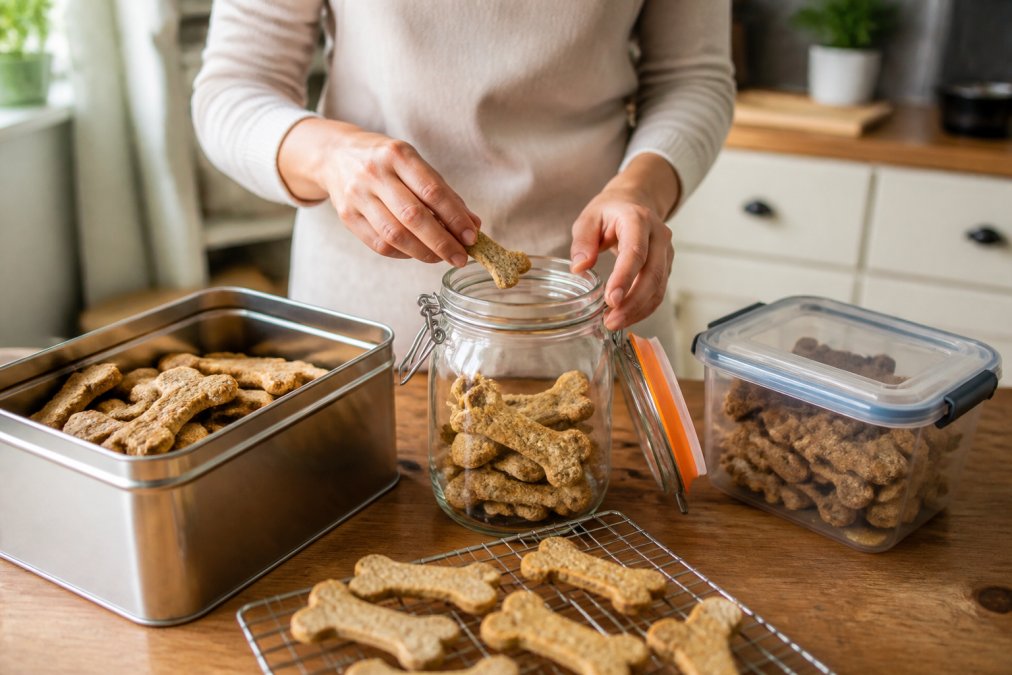
The best containers for homemade dog treats are airtight, food-grade, and opaque. Glass jars with rubber seals, metal tins, and food-grade plastic tubs all work. The seal matters more than the material.
Glass, Metal, or Food-Grade Plastic?
Each option has a trade-off. Here is how they compare:
| Container | Best For | Watch Out For |
|---|---|---|
| Glass jar with seal | Kitchen display, short-term | Breaks if dropped |
| Metal tin | Light blocking, travel | Can dent, may rust |
| Food-grade plastic | Bulk storage, freezer | Absorbs smells over time |
Signs Dog Treats Have Gone Bad
Signs dog treats have gone bad include mould, a sour or musty smell, and a change in texture. Soft or sticky treats that were once crisp have taken on moisture. When in doubt, throw it out.
Check for these warning signs:
- White, green, or blue fuzz anywhere on the treat
- A sour, rancid, or musty smell
- Slimy or sticky surface
- Colour that has darkened or dulled
- Hard treats that have gone soft
Moisture Control and Humidity: The Silent Threats
Moisture control is the most overlooked part of storage, and humidity is its main enemy. Damp air softens hard treats and feeds mould. Keep containers sealed and store them away from steam and heat.
- Direct sunlight, which warms the container and creates condensation
- The area above a kettle, cooker, or dishwasher
- Damp cupboards near external walls
- Open windows in humid weather
Ingredient-Specific Storage for Different Treat Types
Most guides tell you to keep treats in a cool, dry place and stop there. That advice is fine for a plain biscuit and wrong for a liver bite. Different ingredients spoil by different mechanisms, and matching storage to the mechanism is what actually extends shelf life.
- Meat and fish treats: spoil primarily through bacterial growth and fat oxidation. Refrigerate or freeze, always. Keep raw or lightly cooked meat treats in a separate sealed container from dry biscuits, cross-contamination through shared tongs, hands, or a shared shelf is a real risk, not a theoretical one. Wash hands and surfaces after handling.
- Peanut butter and cheese bakes: high fat, moderate moisture. These go rancid before they go mouldy. Refrigerate after opening and use within one to two weeks. A sealed jar at room temperature will keep them for a few days at most.
- Dehydrated liver, jerky, and fish skins: low water activity, so they are stable at room temperature in an airtight jar. Their enemy is humidity, not time. A silica packet in the jar is worth more here than anywhere else.
- Fruit and vegetable treats: high moisture and high sugar, which is a mould magnet. Refrigerate and use within a few days. Do not store them in the same container as dry biscuits, the moisture migrates.
- Hard biscuits and grain-free bakes: the most forgiving category. Sealed jar, cool cupboard, away from light. Grain-free does not mean longer-lasting; it means a different starch profile, and the fat content still sets the clock.
Moisture Control Tools Most Guides Skip
Two inexpensive tools do most of the work here.
Silica gel packets absorb ambient moisture inside a sealed container. Use food-grade sachets only, the ones sold for food storage, not the desiccant sachets packed with electronics, which are not food-safe. Place one sachet per jar, sized to the container volume, and replace it when the indicator (if it has one) changes colour or every few weeks. Do not let the dog chew the sachet; place it under the treats or taped to the underside of the lid.
Cross-Contamination and Cleaning
Between batches, wash containers with hot soapy water and dry them fully before refilling. Residual fat on the inside of a jar goes rancid and taints the next batch. Glass and metal clean down more reliably than plastic, which is why plastic tubs are best reserved for short-term or freezer use.
Travel Storage and Eco-Friendly Options
Travel storage needs a container that seals tight and survives a bag. A screw-top jar or a clip-lock box works well. For day trips, portion treats into small bags so you open one at a time.
- Reuse glass jars and tins
- Pick refillable or recyclable containers
- Avoid single-use plastic bags where you can
- Label with a washable marker, not a sticker
Frequently Asked Questions
How long do artisan dog treats typically last once opened?
Once opened, most artisan dog treats stay fresh for 1 to 2 weeks in an airtight container at room temperature. Dehydrated treats can last 3 to 4 weeks if kept cool and dry. Fresh-baked treats with higher moisture content should be refrigerated after opening and used within 5 to 7 days. Always check the best-before date and follow any storage instructions on the packaging.
Do handmade dog treats need to be refrigerated?
It depends on the ingredients and how they were made. Dehydrated treats and those with low moisture content can be stored at room temperature in an airtight container. Fresh-baked treats, especially those containing meat, eggs, or dairy, should be refrigerated to prevent bacterial growth. If you're unsure, refrigeration is the safer option and won't harm the treats.
What are the best containers for storing preservative-free dog treats?
Glass jars with rubber seals, metal tins with tight-fitting lids, and food-grade plastic containers with locking mechanisms all work well. The key is an airtight seal that keeps out moisture, air, and pests. Avoid open bags or containers with loose lids. For extra protection, add a food-safe desiccant packet to absorb any moisture that gets in when you open the container.
How can you tell if artisan dog treats have gone off?
Look for visible mould, a sour or rancid smell, changes in texture like softness or stickiness, and discolouration. If treats feel damp or have white spots, discard them. Dogs may also refuse treats that have spoiled. Never risk feeding treats that show any of these signs, as mould and bacteria can cause serious illness in dogs.
Storing artisan treats well takes a little effort, but the payoff is real. Pet Bakery makes handmade, human-grade treats with fully traceable ingredients and SALSA approved production, so every batch deserves proper care. Our airtight-friendly bakes, natural recipes, and small-batch freshness make storage simple. Get started with Pet Bakery and keep every treat as good as the day it was baked.